
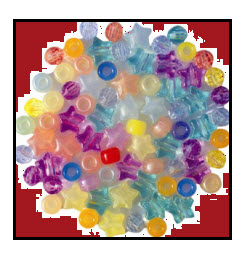
Classification is a term used for organizing things, such as plants and animals, rocks and minerals, or the pony beads used in this activity.
First prepare a mixture of beads for each group of 4 to 5 kids. The mixtures do not have to be exactly the same, but each group should include the following:
- UV sensitive beads (found at Solar Active)
- glow-in-the dark
- glassy, opaque, different colors, and different shapes of beads
Tips for Classifying the Beads:
Note that there is no best way to start this classification. You may choose to change the order of the following steps.
1. Divide the mixture of beads into two groups:
Group 1: Colored Beads
Group 2: Bead without color (can be clear, milky, and/or white)
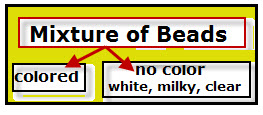
2. Keeping the two groups of beads separated, place them in direct sunlight. This can be done by taking them outdoors, setting them in direct sunlight coming through a window or shine a black light on the beads.
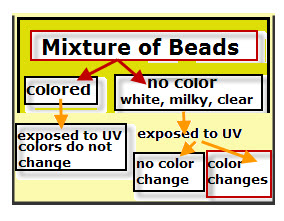
While being exposed to direct sunlight or under a black light, make note of the beads that change color. Separate the beads that change color as shown in the classification chart.
NOTE: Beads that are photosensitive (light sensitive) are generally clear or milky in color when not exposed to UV light (sunlight or black light)
Results:
- The colored group of beads make no color change when exposed to UV light. This means they are not UV sensitive.
- Some of the no color group of beads change colors. Separate the beads that change color in UV from the beads that do not change color while under UV light.
- You should now have three groups of beads. Be sure to keep the groups separated and labeled so that you can identify them.
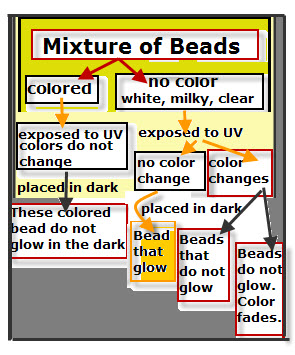
3. Remove the three groups of beads from any light source. You want to determine if any of the beads will now glow-in-the dark. You could set the beads inside a box that has a peep hole. You want the closed box to be dark.
Results:
- Beads that are sensitive to UV light fluoresce when placed under UV light. When removed from the UV light these beads do not glow and their color quickly fades.
- The beads that glow-in-the dark generally do not change colors when exposed to UV light. As a rule the glow-in-the dark beads are opaque and milky to slightly green in color. The UV they absorbed produces light but not instantly, plus the light they produce is very dim and most visible in the dark.
- You now have four groups of beads.
4. Use the physical characteristics of the beads to further divide the beads until all the beads in a group are exactly alike.
Characteristics include:
- flat vs glossy
- opaque, transparent, translucent
- colors
- size
- shape
- have a hole

Biology for Every Kid
How is water transported through plant stems?What’s the effect of osmosis on a raisin?
What’s the best way to grow penicillin?
How are butterflies different from moths?
You will discover the answers in this book.
(Paid Link)