

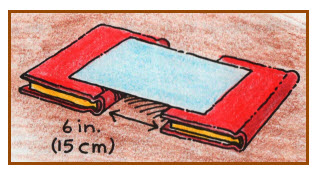
 A bridge is some structure that spans a gap. For example, in the diagram, the ends of the a flat piece of paper are placed on two books. The paper spans the gap between the book.
Instruction for making this Simple Paper Bridge are as follows:
1. Lay two equal size books on a table so that the books are about 6 inches (15 cm) apart.
2. Use one sheet of copy paper to make a bridge between the two books. Make sure that an equal amount of the paper lies on each book.
How strong is this bridge?
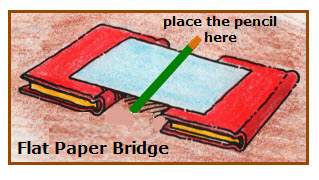 To test the strength of the paper bridge, gently place one pencil at a time across the center of the paper bridge. The position of the test-pencil is shown in the diagram, but the diagram is not intended to represent the results. You must determine for yourself if the flat paper bridge will support the pencil.
If the pencil is too heavy for the paper bridge, remove the pencil, put the paper back in place, and then try objects with less weight, such as wooden toothpicks, paper clips, coins, etc…
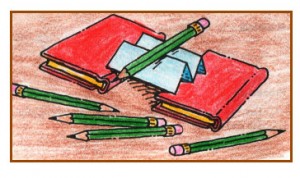 Discover for Yourself
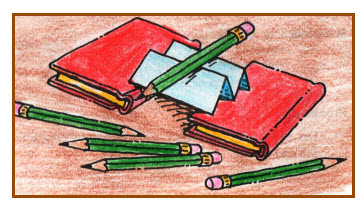
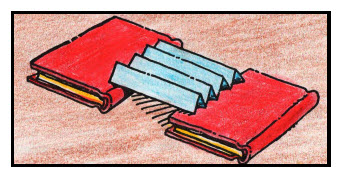
Paper folded in the manner shown in the diagram increases the strength of the paper bridge.
Instructions:
1. Fold a sheet of copy paper in half by placing the short ends together. Fold the paper in half again in the same direction.
2. Unfold the paper then bend it accordion style to form an M shape.
3.Use the folded paper to form a bridge between the books as shown. Again, make sure that an equal amount of the paper is on each book.
4. As before, test the strength of the paper bridge using pencils, or objects with less weight.
Why is the pleated bridge stronger? Because the weight of anything sitting on the bridge is spread out. Each of the peaks in the bridge frame spreads some of the weight down to the foundation. The more peaks, the less weight there is on one part of the bridge. Structural engineers design bridges so that the bridge structure spreads the weight of vehicles down to the foundation. Thus the bridge can support more weight.
Engineers must consider two types of forces on the bridge: compression and tension. For more information about structural forces, see Testing the Strength of an Egg.
 Science Challenge
Look at the diagram. How much stronger is this 2-M shaped bridge than the 1-M shaped bridge previously tested?
 |
Janice VanCleave’s Engineering for Every Kid: Easy Activities That Make Learning Science Fun |