

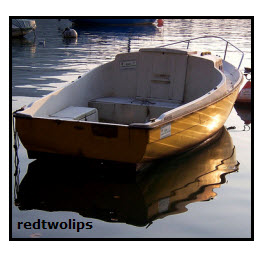
 Buoyancy is an upward force on an object that is floating or submerged in a fluid (liquid or gas).
The upward force of buoyancy on the boat in the picture is equal to the weight of the water displaced by the boat. WOW!! That sounds complicated, but it isn’t.
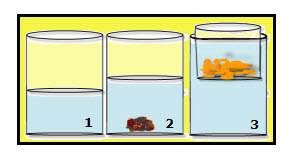
In the diagram below, there are three containers and each has the same amount of water.
Container 1: Two cups of water
Container 2: Two cups of water + one rock
Container 3: Two cups of water + a cup with coins
Notice how high the water surface is in each container. Remember that the amount of water is the same in each container. So how does the water lever change?
 REMEMBER: No two things can occupy the same space at the same time.
The rock in container 2 pushes the water out of its way. This means that the rock displaces (pushes aside) the water. The volume of the rock equals the volume of water that is displaced (pushed aside) by the rock.The rock does not float.
The cup with coins in container 3 pushes the water out of its way. But unlike the rock, the cup of coins floats in the water. The volume of the cup below the water’s surface is equal to the volume of the water displaced (pushed aside) by the submerged part of the cup.
Science Challenge:
Why does the cup of coins float and the rock sinks?
 |
Sticky, Gloppy, Wacky, and Wonderful Experiments |