

What is the difference between a class science project and a science fair project?
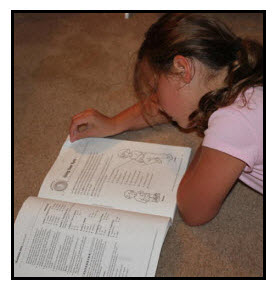
Researching By Reading A Book
First, let me define a few terms needed to describe a science project.
Science is from a Latin word meaning knowledge, specifically about the universe and everything in it. In other words, science is the study of nature and all of its surroundings.
Investigation: An investigation is a process of discovery; an inquiry to obtain or collect information; a detailed or careful examination.
Research: Research is any type of discovery process for the purpose of collecting information; research is an investigation.
Experiment: An experiment is a method of testing; a type of research with the purpose of collecting information; a type of investigation for the purpose of validating a prediction.
Note: An experiment is a type of investigation, which is research. But research can be done without experimenting, such as reading books about the topic being examined.
Project: A project is something that evolves–develops–over time. A project generally takes some planning and organizing. A project is a series of events directed toward a specific goal.
What is a Science Project?
A science project is a project with the purpose of collecting information about a science topic. Some science projects are posters, while others are more involved requiring experiments.
Example: A fifth grade class assignment is for groups to prepare a display about volcanoes. This information could come from printed sources and experiments. The display can include models of different volcanic characteristics. A working volcano model can be part of the presentation.
What is a Science Fair Project?
A Science Fair is a contest and the entries in this contest are called Science Fair Projects.
Like any contest, Science Fairs have entry rules. Regional, state and international science fair project rules are the same. These rules are called the International Rules and are updated each school year. If students plan to enter a regional or state science fair, they must have science projects that align with the international rules.
INTERNATIONAL RULES: Guidelines for Science and Engineering Fairs 2013–2014,
SCIENCE FAIR PROJECT
Example: This could be a class, group, or individual project. One of the main differences from the previous example is this project is designed to solve a specific problem, which could be a science question. This project example is more focused, but like all projects it is a series of events directed toward a goal.
So, how does a science project become an award winning science fair project?
Let me start by telling you that a science fair is a contest. Contestants enter science projects, which are obviously called “science fair projects.”
Science fairs, like all contests, have rules and contestants who follow these rules are more likely to win awards.
Do All Science Fairs Have the Same Rules?
The International Rules for Precollege Science Research are generally used for middle school and high school science fairs. This is because winners from these fairs are eligible to enter regional or state fairs where these rules are required.
Note: The International Rules require that the scientific method be used to design and develop science fair projects.
Elementary Science Fairs generally set their own rules, which are less demanding than the International Rules. Sometimes elementary schools within a school district compete, thus each school would follow the same rules.
Test Yourself: True or False
1. A science fair project is a science project that has been designed and developed according to the rules of the science fair it is entered in.
Answer: True.
2. A science fair project must use a procedure called the scientific method.
Answer: False. The scientific method is part of the International Rules for Precollege Science Research. These rules are generally required for all middle school and high school science fair project. But elementary school fairs often have less structured rules.
3. Award winning science fair projects have been designed and developed according to the rules of the science fair they are entered in.
True: Following the science fair rules is mandatory-Other judging criteria is used to evaluate your project, with the quality of your work and how much you understand about your project being very important.
 |
A Guild for Science Fairs |