

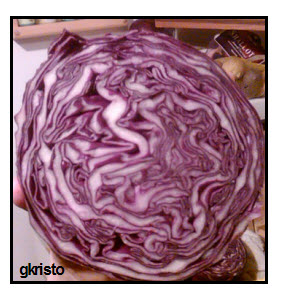
How to Prepare Red Cabbage pH Indicator While the cabbage shown is definitely purple, it is commonly called RED cabbage. With that out-of-the-way, I have a brand new way to extract the colored juice from this cabbage. FREEZE IT!! This was one of those serendipitous discovery. Not wanting to discard an old partial head of […]
Calibrate a pH Indicator Scale
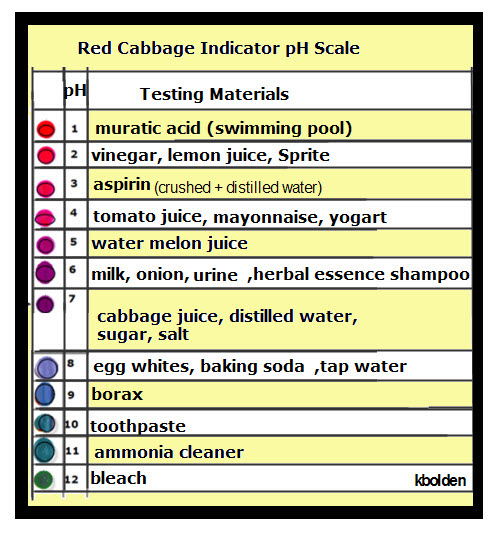
How to Calibrate a pH Scale for Red Cabbage Juice The scale shown was calibrated by KBolden. It gives you an idea of what a completed scale might look like. Notice that at the top and bottom of the scales, the color appear to be too make a distinction. If you get a color scale […]
Challenge 1: Separate Salt and Sand
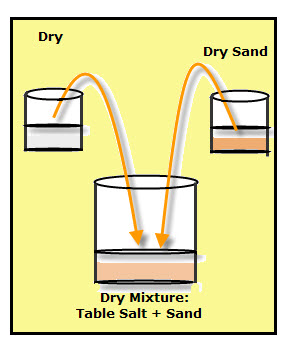
This challenge is to separate and collect the individual parts of a mixture. Make the Mixture: Combine equal amounts of table salt and sand. One-fourth cup of each will work. Teacher Tip: Be sure to use sand and not dirt. Part of the dirt will dissolve. You want only sand, which does not dissolve in […]
Eukaryotic Cells: Plasma Membrane
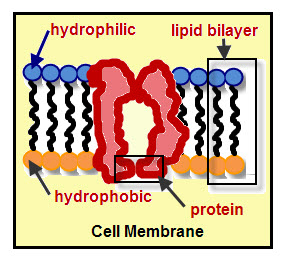
Both animal and plant cells are eukaryotic cells (cells that contain a nucleus). All eukaryotic cells are surrounded by a plasma membrane. This membrane is also called the cell membrane. The plasma membrane is much like a thin plastic sack with tiny hole. This membrane sack contains all the cell parts and fluids. Since there […]
Teeth: Baby Teeth
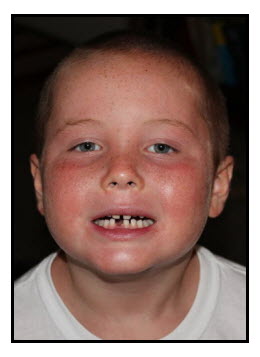
Deciduous Teeth : AKA baby teethmilk teethprimary teethdeciduous teeth People have two sets of teeth. The first set, baby teeth, start forming before a baby is born. When the embryo is about six weeks old, its baby teeth start developing. The eruption of these baby teeth starts when a baby is about six months old. […]
Insulator vs. Conductor
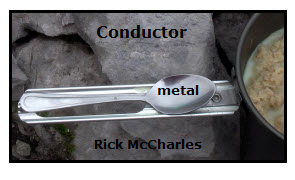
Insulator: A material that does not easily allow energy, such as heat, electricity, light, or sound to pass through it. FYI: A material that does not transmit heat easily will not easily transmit other types of energy. For example: Since wood does not easily transmit heat, wood is used for cooking utensils. You can hold […]
Volume: Water Displacement
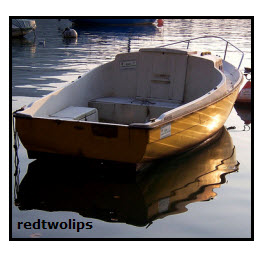
Buoyancy is an upward force on an object that is floating or submerged in a fluid (liquid or gas). The upward force of buoyancy on the boat in the picture is equal to the weight of the water displaced by the boat. WOW!! That sounds complicated, but it isn’t. In the diagram below, there are […]
History Of Classification
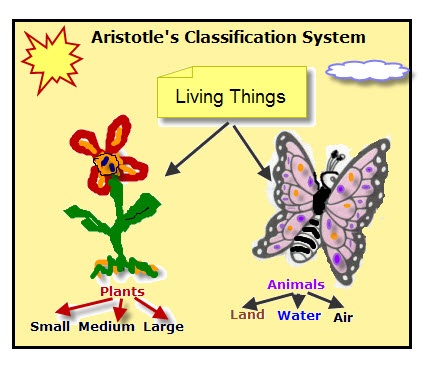
What is Taxonomy and Who Introduced It? Taxonomy is the science of how living things are grouped together. Another name often used for taxonomy is classification. Scientists who study taxonomy are called taxonomists. The Greek scientist, Aristotle (384-322 B.C.), was one of the first scientist to organize living things, thus among other things he studied, […]
Plant Cells: Vacuoles
Vacuoles are a membrane-bound storage sacs filled with a watery fluid. Mature plant cells may have only one vacuole occupying up to 90% of the total plant cell volume. Some of the function of a plant vacuole include: * store wastes* isolate materials that might be harmful to the cell* maintain internal hydrostatic pressure (turgor) […]
Food Preserving:Dehydrating
Did You Know? Raisins are dried out grapes. Another way of describing raisins is that they are dehydrated grapes. Dehydration is the process by which water is lost by something, such as grapes. Terms absorption cell cell wall dehydration grapes hydrate microbes preserving food raisins reconstitution rehydration Even before the Native Americans hung strips of […]
- « Previous Page
- 1
- …
- 40
- 41
- 42
- 43
- 44
- …
- 96
- Next Page »