

Vision depends on a small part of the Electromagnetic Spectrum Called Visible Light.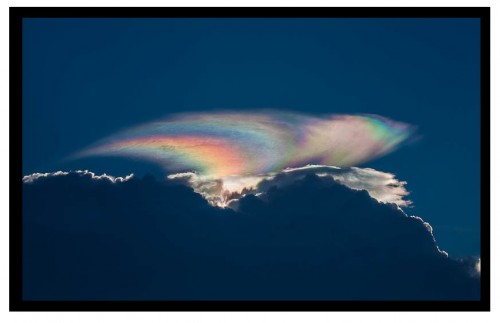
The only type of light energy that you can visually perceive is called visual light. Visual light can be broken into seven parts, each part with a different amount of energy, and each amount of energy is perceived as a different color.
ROY G. B IV is a mnemonic used to remember the seven colors of the rainbow in order of their energy from least to greatest. (Red, Orange, Yellow, Green, Blue Indigo and Violet)
Don’t panic over the term electromagnetic spectrum!
I do not want anyone to think that visible light is the only form of light energy. Microwaves and radio waves are also forms of electromagnetic energy just light visible light is. While the entire electromagnetic spectrum is made up of light enegy, the only part of it that people and some animals can see is called Visual Light. For this article, only how people perceive visible light will be discussed.
Light from the Sun and most indoor lighting is white light, meaning that it contains all the light colors that make up visible light. You only see objects because light reflecting off of the object enters your eyes. Without light you see nothing. While your eyes may be functional, without light you are blind. I’ve experienced in caves when all lights are shut off.
The color of objects depends on how the materials making up the object react to light. The chemical composition of any material will absorb, reflect, and/or transmit all or parts of the visible light striking it. White light is assumed to be the light source for the following examples.
White objects, such as clouds reflect all of the white light striking it. Clouds are made up of tiny droplets of water and ice particles. White light is reflected off of these materials to your eyes and you perceive the formations to be white. Special sensory cells inside your eyes absorb the light energy that enters through your eyes’ pupil. These cells called rods and cones send an electrical message via nerves to your brain. In your brain the message is decoded and interpreted. You perceive a shape in the sky to be a white cloud because you have stored in your brain knowledge of what a white cloud looks like.
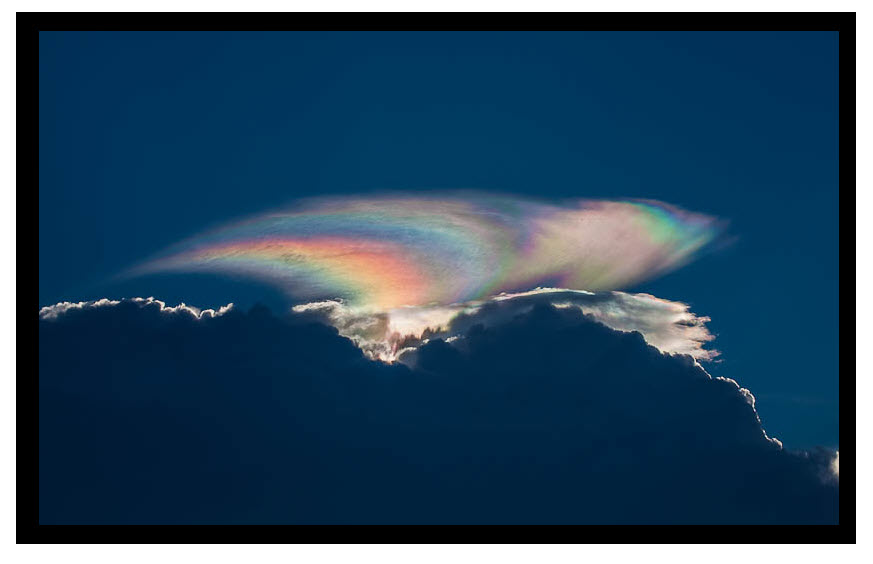
Have you ever seen something that you had never seen before? You cannot recognize a person that you have never seen. The first time I saw rainbow colors that appeared across part of the sky as shown in the photo above, I stopped my car and watched the colors move. I later discovered that this phenomenon is called an iridescent cloud. These colors are due to the separation of white sunlight in a somewhat similar way that rainbow colors form when white light strikes a drop of oil floating on water.
The oil spreads out forming on the water’s surface. White light reflects off the surface of the oil and some light passes through the oil and is reflected off the water. When light enters the oil it is first refracted, meaning the light changes direction. The light that is reflected off the inner layer of the oil will exit the oil. As the light leaves the oil it refracts again, changes direction.

Rainbow Colors are seen in the Thin Oil Film Because of Light Interference
The reflection of light off the surface of the oil combines with the light that bounces off the surface of the water and refracts as it leaves the oil and inters air. The combination of this light is called interference. Sometimes when the light combines they cancel each other out. Sometimes the combination makes the color brighter.
Constructive Interference is when the waves of light align exactly, which is called being in phase.
Destructive Interference is when the waves of light are not aligned exactly and cancel each other. This is called being out of phase.
Find Out for Yourself how Colors are produced by interference.
See Perception to find out more about optical illusions due to how an image is perceived.

Big Book of Science Experiments
A book of fun informative experiments about astronomy, biology, chemistry, earth science, and physics.
(Paid Link)