VanCleave's Science Fun

Your Guide to Science Projects, Fun Experiments, and Science Research

ABOUT THE SOUND PICTURE

With mouth wide open, vibrating air coming up the throat from the vocal chords leaving the open mouth and spreading in all directions. Hi, I am Janice VanCleave, author of 50+ best-selling science experiment books for children ages 4 through high school. I taught science for 27 years and now am creating this science website.   My scream was not staged. The picture was to be of two adult cats, which I was holding. A microsecond before the camera snapped, the two cats dug their claws into my skin as they prepared to leap out of my arms. A picture like this is great for making inferences. Kids could make "guesses" as to why I am screaming. They would be drawing on facts from the photo, such as I look like I am in pain or maybe I am just pretending.

Sound Supplies and Sound Investigations

Educational Innovation Sound Supplies A black and yellow logo for Educational Innovations. A place to find fun science supplies.
  • Home
  • ASK JANICE
  • Teacher Guide
  • Homeschool Science For Kids

Volume: Water Displacement

By Janice VanCleave

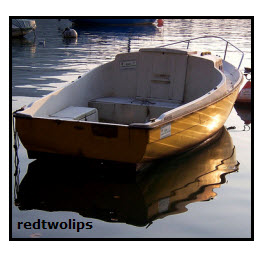
Buoyancy is an upward force on an object that is floating or submerged in a fluid (liquid or gas). The upward force of buoyancy on the boat in the picture is equal to the weight of the water displaced by the boat. WOW!! That sounds complicated, but it isn’t. In the diagram below, there are […]

Filed Under: Chemistry, Physics

Chemical Reactions:Cake Baking

By Janice VanCleave

Chemistry is the study of the composition of substances and their properties and reactions. Baking a cake is a great way to study physical and chemical properties as well as physical and chemical changes. First, I’ll list a few terms that will be introduced: physical properties: The physical traits of a substance determined by using […]

Filed Under: Chemistry

Evaporation: Cools Skin

By Janice VanCleave

Evaporation Evaporation is a change from a liquid to a gas. Evaporation occurs below the boiling point of the liquid. This means that water will evaporate a temperatures below 212 degrees Fahrenheit (100 degrees Celsius). Activity Wet a cotton ball (or sponge) with water. The objective is to wet a small place on the skin, […]

Filed Under: Chemistry Tagged With: chemistry, cool, Energy, evaporation

Cohesion: Surface Tension

By Janice VanCleave

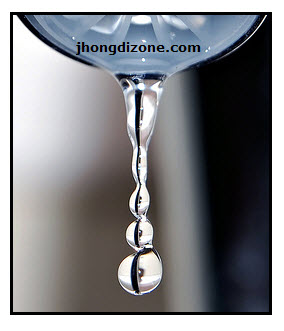
The water drops at the end of the stream form due to the cohesion between the molecules particularily the surface tension of the surface water molecules.

  What is Cohesion and How does it Relate to Surface Tension Cohesion is the attraction that like- molecules have for each other. Water molecules have an attraction for each other. This attraction is called cohesion. Surface Tension Surface tension is the skin-like surface of a liquid due to the cohesive forces between the liquid […]

Filed Under: Chemistry Tagged With: cohesion, rain drops, sphere, surface tension

Chemisty: Perfume

By Janice VanCleave

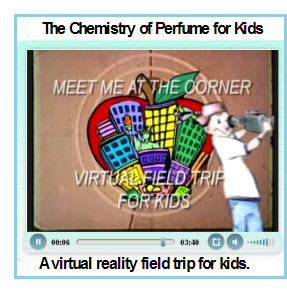
I love Meet Me At The Corner videos. They all present information via an interview with someone in the know. The Chemistry of Perfume for Kids video contains an interview with a perfume maker. He has lots of interesting facts about perfume, such as: At one time people put perfume on their gloves. These scented […]

Filed Under: Chemistry Tagged With: perfume

Symbols for Synthetic Elements

By Janice VanCleave

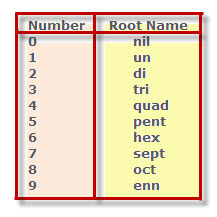
Synthetic elements are man-made. These elements are radioactive (decay giving off radiation). Synthetic elements are often named after the person discovering them or after some famous scientist, such as Einsteinium. The person who is given credit for discovering an element has the right to name it. Both Soviet and American scientists claimed to have been […]

Filed Under: Chemistry

What is Table Sugar?

By Janice VanCleave

Table sugar is commonly used to sweeten food. There are different kinds of sugars, including glucose, fructose, and sucrose. Glucose is commonly called blood sugar; fructose is sugar in fruit; sucrose is table sugar.  Sucrose is a carbohydrate, which is a chemical made of carbon, hydrogen and oxygen. Sucrose molecules contain 12 atoms of carbon, […]

Filed Under: Chemistry Tagged With: crystals, sucrose

Rusting

By Janice VanCleave

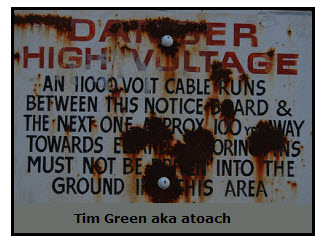
Rusting is a Chemical Reaction Rusting is a type of chemical reaction called a combination reaction. A combination reaction means that substances combine to form one product. Rusting is the combination of iron and oxygen. Iron + Oxygen yields Iron Oxide (iron III oxide) Iron oxide (rust) has a  reddish brown color as shown in […]

Filed Under: Chemistry

Chemical Symbols

By Janice VanCleave

Gold

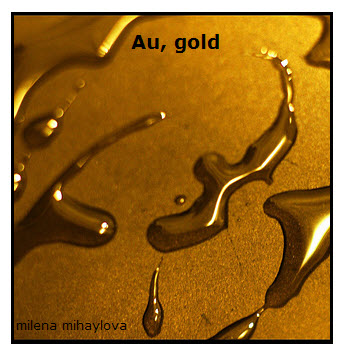
A chemical symbol is an abbreviated way of representing the name of an element. For example: H for hydrogen; C for carbon; Au for gold In the early 1800s the British scientist John Dalton (1766-1844) first used picture symbols for elements. These were designed so that other scientists could learn by sharing ideas. Soon after […]

Filed Under: Chemistry

What is a Supersaturated Solution?

By Janice VanCleave

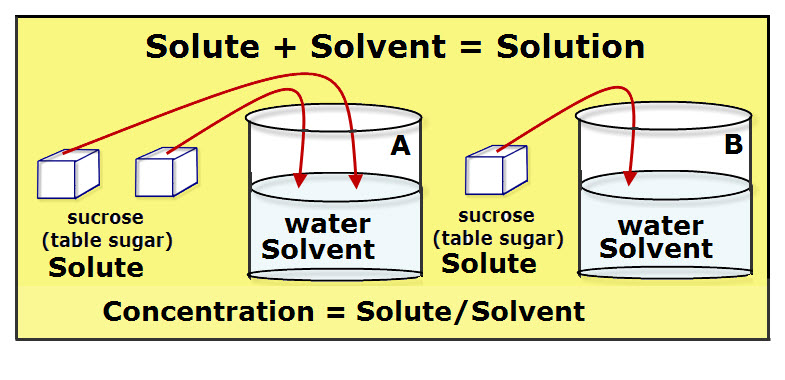
Each solution is a mixture of sugar (sucrose) and water. Sugar is the solute and water the solvent. Solution A has twice as much sugar added to the same amount of water as does solution B. Thus, Solution A is more concentrated than is Solution B. You can also say that of the two solutions, A and B, Solution B is more dilute.

What is a Solution? How do You Saturated A Solution? A solution is  a homogeneous mixture, meaning it is the same throughout. A solution can be made of more than two substance, with one of the substances being the solvent and the substances that dissolve in the solvent are called solutes. You make and use […]

Filed Under: Chemistry Tagged With: concentration, dilute, precipitate, rock candy, saturated, solute, solution, solvent, supersaturated

  • « Previous Page
  • 1
  • …
  • 8
  • 9
  • 10
  • 11
  • 12
  • …
  • 19
  • Next Page »

Topic Search

Visitors From All Over the World


Welcome to Janice’s Science Extravaganza!

The spoon hanging from the string vibrates when struck and these vibrations are transmitted through the string and the sound is amplified by the plastic cups. ABOUT ME: Hi, I am Janice VanCleave, author of 50 best-selling science experiment books for children ages 4 through high school. I taught science for 27 years. MORE.....

Introductory CAT Lesson

Science CAT Activity and SCI/Art  

SOON! More CAT Activities

Janice VanCleave CAT Stickers

Order Your CAT Stickers Here

FAQs

Janice VanCleave answers your questions about all the different kinds of color changing products.

Check here for Frequently Asked Questions about CAT
stickers.

Send Questions to Janice

Send Information to me using this form.

Contact Janice

Other Janice VanCleave Free Color Changing Lessons

  • HAT Stickers Heat Activated Thermochromic Stickers Stickers that change colors when heated.
  • SA Stickers Sun Activated Stickers Stickers that change color when exposed to sunlight.
  • TLC Dot Stickers Thermochromic Liquid Crystal Stickers Stickers that, like Mood Rings, change color when heated.

Copyright © 2026 · Janice Van Cleave · JVC's Science Fair Projects · Log in