

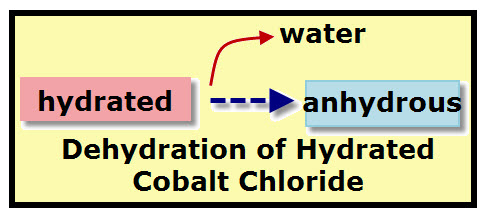
Chemistry Facts: Hydrates are chemicals that have water as part of their structure. If these chemical lose some or all of this water they change in appearance. Cobalt Chloride is an example of a chemical hydrate.When cobalt chloride is hydrated (having water) its color is pink.When cobalt chloride is dehydrated (loses water) its color is […]
Lead Poisoning
Sugars are organic compounds. But there are some inorganic compounds that are sweet, including beryllium chloride and lead acetate. The latter may have contributed to lead poisoning among the ancient Roman aristocracy: the Roman delicacy defrutun was prepared by boiling soured wine (containing acetic acid) in lead pots. Neither bronze nor copper kettles were used […]
Scientific Method for Daily Problem Solving
The scientific method is nothing more than a process for discovering answers. While the name refers to “science,” this method of problem solving can be used for any type of problem. Teaching Tip: Ask kids to provide an example of identifying a problem in their life and how they solved it. For this assignment, I […]
Covalent Bonds
A bond is an attraction between atoms. A covalent bond results from the sharing of valence electrons between two atoms. Each covalent bond is made up of one pair of electrons. Both electrons in the bonding pair can be from one atom, or the pair can contain one electron from each atom. When atoms covalently […]
What Are Hydrogen Bonds?
YIKES! While they sound very similar, don’t confuse the term ” a hydrogen bond” with the term “a hydrogen bomb”! Since a hydrogen bond forms between molecules with polar covalent bonds, I will first explain polar covalent bonds. covalent bond: Formed between two atoms that share valence electrons (electrons in the outermost energy shell). The […]
Covalent Bonds
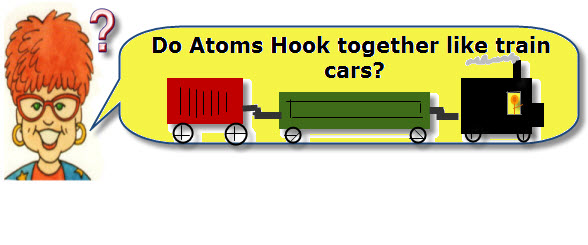
Chemical bonds are simply how the atoms “hook” together. Instead of atoms being physically attachment, much like a button that hooks into a button hole, chemical bonds are electrical attractions, called electromagnetic forces. Electrons are negatively charged particles that move around the center of an atom called the nucleus. The nucleus is where the atom’s […]
Chemistry: Reducing Agent
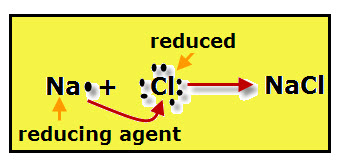
In a chemical redox reaction, the reducing agent donates electrons to another element. Thus, a reducing agent is an element that causes another element to be reduced (to gain electrons). When a reducing agent loses its electrons, it is said to be oxidized. In a redox reaction, there has to be one element that loses […]
Chemistry:Oxidizing Agent
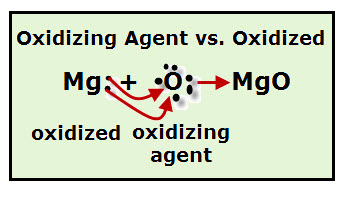
An oxidizing agent is a substance that causes another substance to be oxidized (to lose electrons). In the diagram, oxygen is the oxidizing agent because it draws away magnesium’s valence electrons.An oxidizing agents cause other elements to lose electrons. The oxidizing agent gains the electrons lost by other elements. While oxygen is the oxidizing agent […]
Chemistry: Redox
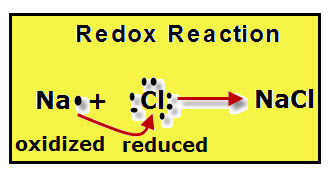
Oxidation is a type of chemical reaction in which electrons are transferred from one substance to another. For oxidation to occur, one substance must lose electrons and a second substance must gain the lost electrons. The substance gaining electrons is said to be reduced and the substance losing the electrons is said to be oxidized. […]
Aerobic Oxidation
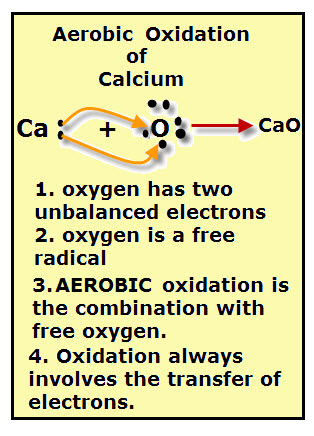
Oxidation is a chemical reaction in which electrons are transferred from one substance to another. Aerobic Oxidation is a chemical reaction in which one substance combines with oxygen. Like any oxidation reaction, there is a transfer of electrons. When free oxygen is part of the reaction, electrons are transferred from one substance to oxygen. The […]
- « Previous Page
- 1
- …
- 3
- 4
- 5
- 6
- 7
- …
- 19
- Next Page »